


I was talking to a doctor about three months ago, and he asked me how risky trading was. “Isn’t that gambling, I mean, how much risk are you willing to take?”
I told him that my model adjusted for the current market volatility and that each trade had a measured about or risk backed by a catastrophic stop (which really isn’t catastrophic), and a breakeven stop once a certain profit level is reached. He just shook his head.
What I am going to discuss today is a comparison of a trader’s risk to the risk that other professionals, tradesman, and entrepreneurs take in what they do. It may surprise you, but it shouldn’t.
Let’s start with the trader of options, stocks, futures and forex.
The Trader
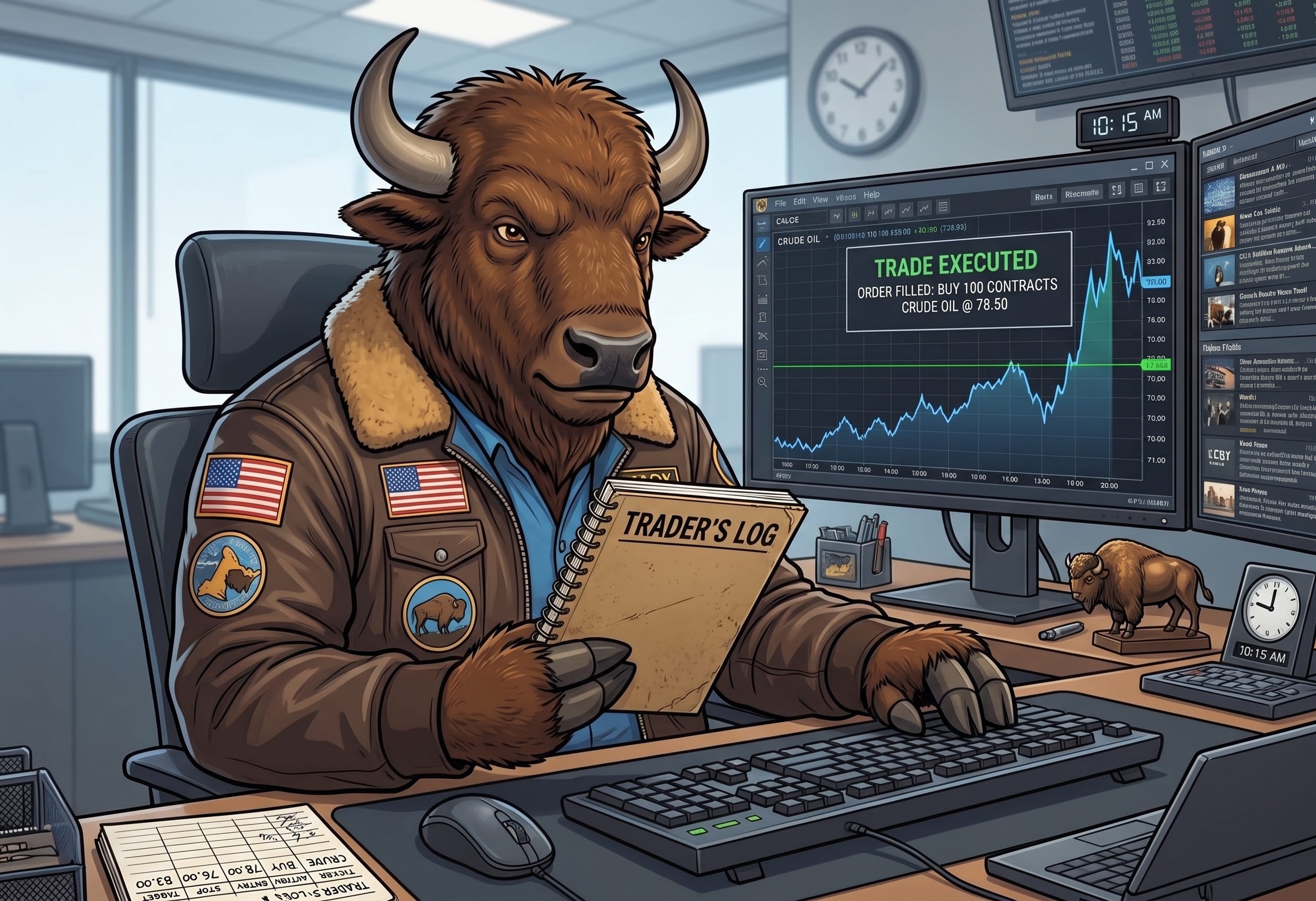
It’s official. Trading is an absolutely disastrous business to be in, according to FINRA. 72% of day traders ended the year with financial losses, and among proprietary traders treating it as a professional business, only 16% were profitable. 80% of day traders quit within the first two years, and only 1% maintain consistent profitability over a five-year horizon.
Capital requirements: The latest from FINRA states (for the USA):'
In the United States there is no single “minimum capital to trade.” Requirements depend on the product, account type (cash vs. margin), whether you day-trade or hold overnight, broker house rules, and—for derivatives—exchange or CFTC/NFA margin. Below is the current picture as of September 2026.Important 2026 change for stocks and equity options: The FINRA Pattern Day Trader (PDT) rule and its $25,000 equity floor were eliminated effective June 4, 2026 (FINRA Rule 4210 amendments, Regulatory Notice 26-10). Brokers have until October 20, 2027 to finish implementing the new intraday-margin standard, so some firms may still apply the old PDT rules during the transition. Always check your specific broker. You can begin with a few thousand dollars in micro-mini index futures or options, but you MUST understand risk and have a trade plan in place to make these businesses profitable over time. There WILL be losses, but as you will see in the other examples, there will always be losses everywhere.
Educational Requirements: None. But you MUST seek education, and it can be gleaned from books, other professionals, and your own experience if you study consistently and learn new techniques.
Overhead: A computer, internet connection, a desk, and a chair. You will probably need a trading platform with monthly data service also. Commissions are negligent now, if you find a good broker.
Why am I starting with the trader here? I want to make a comparison to other entrepreneurial businesses that exist in the world. As this series progresses, I will expand on why trading really isn’t as disastrously dangerous if you apply your craft property,
Now let’s consider other professions.
The Restaurant Owner
“The opening of a standalone restaurant is a dream that many young and mature people have as a sign of independence and customer service. That is why so many independent restaurants open in the USA each year. According to restaurantdata.com:
There is no single official government tally of “new independent restaurants opened,” so published figures vary by source, definition (what counts as a restaurant vs. other foodservice), and methodology (legal filings/permits vs. consumer listings). The most detailed, consistent tracking of new openings comes from Restaurantdata.com, which compiles state filings, legal notices, building permits, and similar records.”
According to their multi-year analysis of projected/verified opening records:
2020: ~12,300 independent openings
2021: ~14,800
2022: ~15,900
2023: ~16,400
2024: ~21,100
2025: ~14,500–14,900
On average, about 15,000 to 21,000 new standalone independent (no-franchise) restaurants have started each year since the pandemic era. You can read more about that here.
Capital Requirements - According to restaurantowner.com:
Startup costs vary enormously by concept, location, whether the space is a second-generation restaurant (already fitted with kitchen infrastructure), new construction versus remodel, and city versus smaller market. The most cited primary dataset is a RestaurantOwner.com survey of 350+ independent operators:
Median total cost to open: $375,500.
Middle 50% of restaurants: roughly $175,500 to $750,500.
Full-service median: $475,500.
New ground-up construction (excluding real estate): median around $650,000.
Remodel of an existing restaurant space: median around $275,500.
Typical size in the survey: ~3,070 square feet and 120 seats, or about $113 per square foot / $3,586 per seat.
Typical ranges by format (including equipment, build-out, licenses, initial inventory, and working capital):
Food truck or ghost kitchen: $50,000–$200,000.
Café/coffee shop: $80,000–$300,000.
Fast-casual / limited-service: $150,000–$500,000.
Casual full-service: $250,000–$750,000+.
Fine dining: $500,000–$1.5 million+.
I have friends in West Texas who own a casual dining and entertainment venue for families. They grow and source all of the ingredients for their restaurant to save money and improve quality. That next to last number looks to be correct in terms of capital investing.
How is this different or better than trading?
If you have to finance the storefront and other items, you have a but of negative leverage on a very large capital sum. You have to have restaurant licenses, beverage licenses, property and casualty insurance, disability insurance for employees, liability insurance, property taxes, and food equipment, And that is just the beginning.
SBA 7(a) loans and similar financing typically require 10–30% owner equity. Personal guarantees and collateral (often including home equity) are common, so the owner’s personal financial exposure can be significant even if the restaurant is a limited-liability entity. In short, an “average” independent restaurant owner in the U.S. is looking at a mid-six-figure investment with a first-year closure risk in the mid-teens to mid-20s percent range (lower in recent tracking data), roughly even odds of still being open at five years, and persistently thin margins that leave little room for error. Adequate capitalization, a second-generation space, strong location analysis, and tight operations materially improve the odds. Capital reserve for emergency costs can vary from 6 months revenue to 24 months revenue in certain cases.
If you can survive the ramp=up and cashflow requirements, your restaurant can still face a five year failure rate of 30%. Failure rates in a normal independent restaurant are certainly slower than trading, particularly if you don’t have a business plan, but the amount of potential capital destruction is enormous if you do fail. Trading can be accomplished with limited capital, and you can still do it while working a full-time job or business.
The Commission-Only Salesperson

I pulled data out of Grok this particular time, to get a range of “failure rates” and costs of operating that kind of a business. This varies substantially depending on the industry you sell for. I can vouch for my own story.
I was an institutional broker in the early 1990s and I have an incredible client list (and some who would have gone directly into a relationship with my firm). The cost of capital to start up a business like that was over 7-figures when I decided to leave the entrepreneurial firm I worked with, and I could never get it started without literally selling my soul to the investors, which I was not willing to do. The key factor here is that if you start such a business, you should expect to have 6 to 18 months of expenses saved up before you can “cover your nut”. I did (and more, as I had been an investor for sometime prior to working with him) and that angered him, because he couldn’t manipulate me. I passed the exams in two weeks after I entered the firm (as I had studied for them prior to that time).
The point of this (and you can look at the link for discussions of basic overhead) is that you would literally have to have cash piled up for some time before you could earn your keep. Trading small in the beginning can allow you to build slowly, and you can still keep a full-time job and “make groceries” as they say in New Orleans and manage your risk while doing that.
The Residential Building Contractor
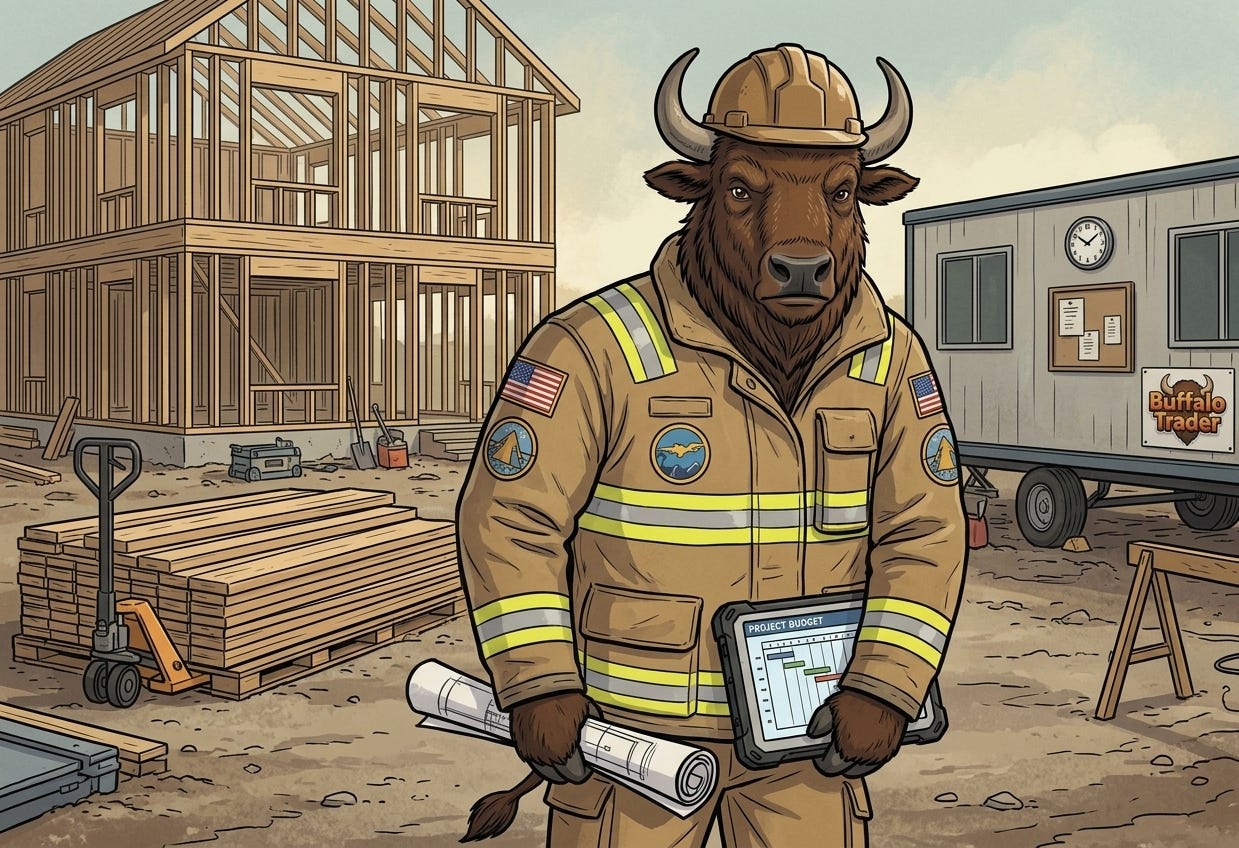
Building contractors also have a rather aggressive failure rate over a 5 to 10 year period, depending upon how well capitalized they are for true working capital (materials, etc.). A typical start-up would require $75,000 to $100,000 when all equipment is organized to do business. Licensing, errors and omissions insurance, liability insurance, and all the rest pile on rather aggressively. The work can be long and grueling in some cases depending on the territory you cover. The failure rate is, once again, slow, but the capital eaten up in the process can stack up fairly quickly.
What Is the Point of All This Comparison?
It is certainly NOT to denigrate these and other professions. People in all professions deserve credit for taking suitable risk inherent with what they do, because the vast majority of them want to provide excellent service and earn a living for themselves and their families. What is does show, however, is that, on a starting basis, many have far more qualifications and capital hurdles to overcome just to get started.
What I want people to understand is that, if trading is pursued as a second income and then perhaps as a primary income stream, it too can create risk, but over time, with discipline and education, those risks, just like the risks of being a commissioned salesperson, a contractor, or a restaurant owner, those risks are manageable. You have to have both the desire to do them and an extreme desire to learn about how to do them. It is a lifelong process and not one to be taken lightly.
In this series, I will discuss how factors associated with trading can be managed to create an edge for the trader to profit from. It can be done even in the midst of high-frequency trading and all sorts of market action. Since you have the ability to trade more agilely that a multi-billion dollar hedge fund, you can seek out high probability opportunities for profit. It takes work, planning, and discipline to execute, but it can be done. It is a numbers game, after all, and your mastery of simple math combined with a strategy can help you achieve your goals if you stick to them.
We will get into the numbers in the next part of this series! Stay tuned.
Thank you, as always for supporting the Buffalo Trader’s Writing Desk!